
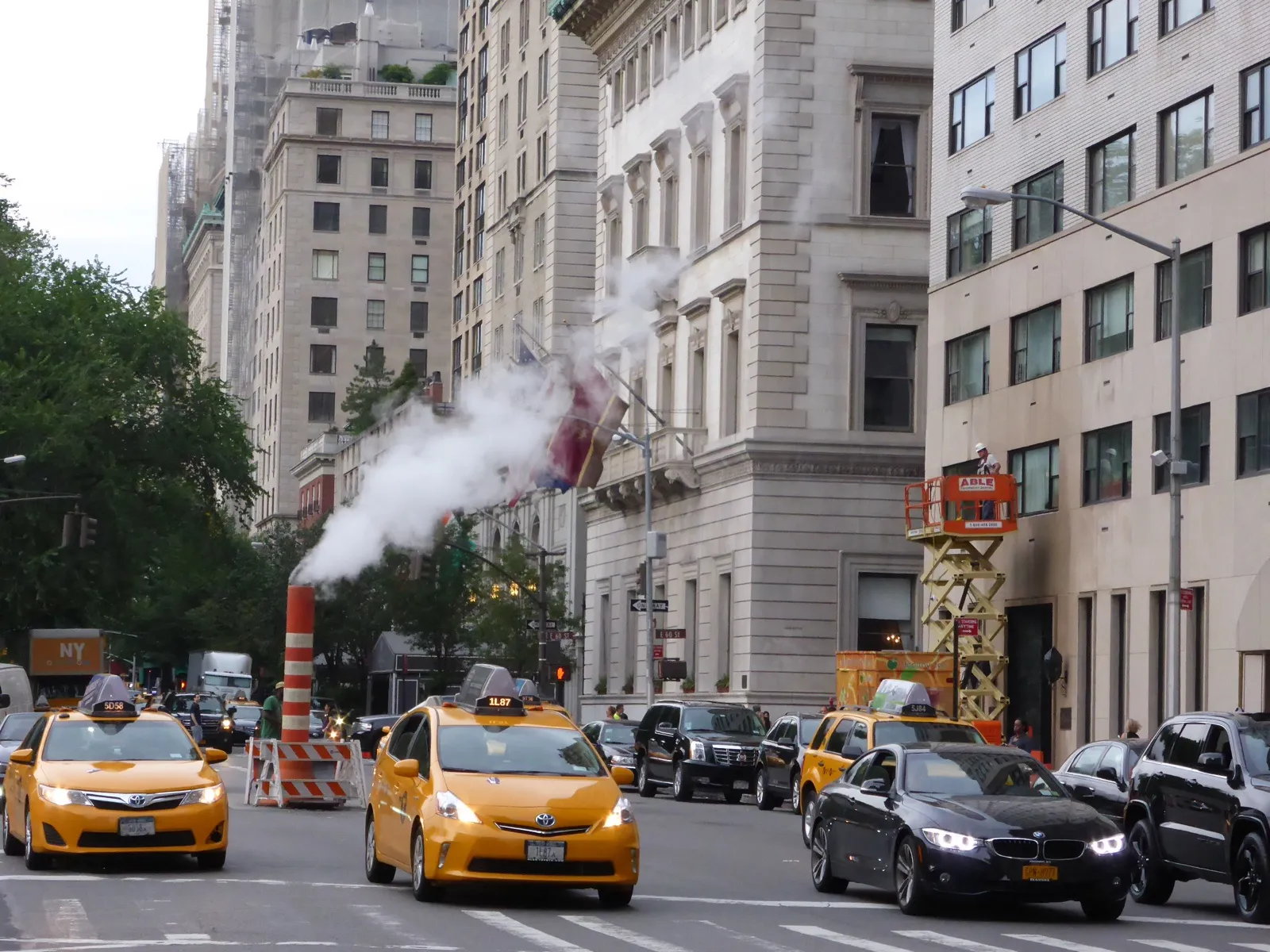
NYC Congestion Pricing, Explained
The MTA’s toll for driving into Manhattan at and below 60th Street, in effect around the clock since January 5, 2025. One flat rate: gratuity, tax and card fees included, tolls added before you confirm. No surprises, never surged.
On time, flights tracked · Licensed chauffeurs in black suits · Wi-Fi on board · Confirmed by a person
Where and when
Where the Zone Is, and When the Peak Rate Applies
NYC congestion pricing is the MTA’s toll for driving into the Congestion Relief Zone: the local streets and avenues of Manhattan from 60th Street south, not counting the West Side Highway (Route 9A), the FDR Drive or the links from the Hugh L. Carey Tunnel to West Street. It began on January 5, 2025, and it applies around the clock, with peak hours on weekdays from 5 a.m. until 9 p.m. and on weekends from 9 a.m. until 9 p.m.
- 160th StreetThe zone takes in the local streets and avenues from 60th Street south.
- 2West Side Highway/Route 9ANot tolled. A vehicle that travels only on West Street and the West Side Highway is not charged.
- 3FDR DriveNot tolled, on the same rule as the West Side Highway.
- 4Hugh L. Carey Tunnel connectionsThe tunnel’s connections to West Street are not part of the zone.
- 596th StreetA different line: the state congestion surcharge on taxi and for-hire trips that start, end or pass through Manhattan below 96th Street.
When the peak rate applies
Tolling is in effect 24 hours a day. Pick a day to see the peak window.
- Peak
- Overnight, 75% less than peak
Weekdays: peak rate from 5 a.m. until 9 p.m.; the overnight rate, 75% less, the rest of the day.
Who pays
Who Pays, and How Often
Private cars pay once a day; on taxi, black car and app trips the charge is per trip instead.
| Vehicle | How it is charged |
|---|---|
| Cars, SUVs, pickup trucks and small vans | Once a day, at the toll in effect at the first entry; the day runs from 12:00 a.m. to 11:59 p.m. |
| Motorcycles | Once a day |
| Trucks and buses | On each entry |
| Yellow taxis, green cabs and black cars | A per-trip charge, paid by you, on each trip into, out of, inside or through the zone, instead of the daily toll |
| App-based rides | A per-trip charge the app company collects from you on each trip into, out of, inside or through the zone |
| Exempt | Qualifying authorized emergency vehicles, qualifying vehicles transporting people with disabilities, and specialized government vehicles |
| Also exempt | School buses under contract with the NYC Department of Education, TLC-licensed commuter vans, and buses on scheduled commuter service open to the public |
| Residents of the zone | Charged when their vehicle enters, like anyone else; never for days parked or for trips made entirely inside the zone |
| Electric and low-emission cars | Tolled like any other vehicle, unless the car or its owner has an approved exemption |
Brooklyn Bridge
From the FDR Drive to the Brooklyn Bridge, and from the bridge onto the FDR northbound, the route stays off the street grid and is not tolled. From the bridge to the FDR southbound it meets the grid at Pearl Street, so it is tolled.
Williamsburg and Manhattan Bridges
A trip between the FDR Drive and either bridge runs over Manhattan streets, so it is tolled.
Hugh L. Carey Tunnel
Between the tunnel and West Street, heading north or south toward the FDR, there is no toll. Leaving the tunnel onto Trinity Place, or anywhere else in the zone, is tolled, with a crossing credit.
Queens crossings
The FDR Drive to or from the Queens-Midtown Tunnel crosses Manhattan streets and is tolled, with a crossing credit. The Queensboro Bridge link is tolled too, except from Queens to the Upper East Side on the upper level, whose ramp lands on 62nd Street.
Lincoln and Holland Tunnels
Both reach the West Side Highway through Manhattan streets, so drivers coming in from New Jersey that way are tolled, with a crossing credit.
Parking at the edge
Parking on or just off the FDR Drive or the West Side Highway is tolled: once a vehicle drops out of sight of the detection points along those roads, it is charged.
Passing through
Staying on the West Side Highway or the FDR Drive from one entry point to a different exit is not tolled.
Monitoring, not tolling
Equipment on the excluded roads and north of 60th Street includes traffic monitoring points that judge how the zone is working. They collect no tolls.
Vans and trucks
A van with no raised roof above the windshield pays as a passenger vehicle. One with an extended roof above the windshield, or a modified body behind the cab, pays as a small truck.
Source: MTA, Congestion Relief Zone frequently asked questions (read November 7, 2026).
Exemptions and the Low-Income Discount Plan are set out on the MTA’s exemptions page, and the state tax credit for residents of the zone on the Department of Taxation and Finance site (both read November 7, 2026). Accounts are opened through E-ZPass New York, the only site real E-ZPass messages point to.
Opening an account
Apply on the E-ZPass NY website and the transponder and account profile arrive within five to seven business days. An out-of-state plate can be linked to an E-ZPass NY account.
Pay Per Trip
E-ZPass NY offers a Pay Per Trip option that needs no prepaid balance, and the MTA charges no monthly fee for an account.
Plates matter
The cameras read every plate entering the zone. A car whose plate is not on the E-ZPass account it carries, such as a borrowed or rented car, sends a Tolls by Mail bill to its registered owner.
Driving inside the zone is not tolled; leaving it across 60th Street or one of the eight bridges and tunnels and coming back counts as a new entry, though a car pays no more than its first entry’s toll in a day. A credit lowers the peak toll for E-ZPass vehicles entering through the Lincoln, Holland, Queens-Midtown or Hugh L. Carey Tunnel, with no credit overnight. E-ZPass rates are generally 50% lower than Tolls by Mail, and low-income vehicle owners may qualify for the Low-Income Discount Plan.
Sources (read November 4, 2026): MTA, About the Congestion Relief Zone toll, Frequently asked questions and Taxis and FHVs; NYC 311, Congestion Pricing Program; TLC, Taxi Fare and passenger questions (read November 7, 2026); NYS Department of Taxation and Finance, Congestion surcharge (read November 7, 2026). No toll or charge amounts are given here; the MTA publishes the current rates.
Also read November 7, 2026: MTA, The most detailed view of NYC traffic (so far), updated January 30, 2025; TLC, Congestion Surcharge. Read November 11, 2026: Port Authority of New York and New Jersey, JFK Schedule of Charges, LaGuardia Schedule of Charges, Approved Fee Changes, Aviation and Bridge and Tunnel Tolls.
On a trip
How It Reaches You on a Trip
Taxi, app or a car reserved ahead: the charge comes from the same MTA toll program, but it reaches you in different ways.
Yellow or green taxi
On the meter
The TLC lists the MTA congestion pricing toll as a separate “Plus” charge on top of the fare for the zone at and below 60th Street. Any trip that starts, ends or passes through Manhattan below 96th Street also carries the separate New York State congestion surcharge.
App-based ride
Per trip
The app company collects a per-trip charge from you on any trip in, into, out of or through the zone, as the MTA’s rules for for-hire companies set out.
Sultan Rides
Added before you confirm
One flat rate. Gratuity, tax and card fees are included; tolls and congestion pricing for your route are added before you confirm. Meet and greet is available as an add-on. No surprises, never surged.
The charge reaches many Sultan Rides car services: trips with the Manhattan car service, the JFK to Manhattan route, and airport transfers to Kennedy Airport, LaGuardia and Newark Liberty.
“Reliability is everything when you have early morning business meetings across the city, and Sultan Rides never misses a beat. The vehicle smelled fresh, the leather interior was pristine, and the driver navigated New York City traffic smoothly while I caught up on calls.”
“Took a ride from Manhattan to the Hamptons on a Friday. The chauffeur took a smart route around the traffic and got me to my destination safely!!”
Rated 5.0 on Google · Read the reviews
The cars
Travel Into the Zone, Price Shown First
Four car classes for trips into, out of and through the zone, each with a licensed chauffeur. Your car is the class you reserve or similar, sometimes with a free upgrade to an SUV.
The Sultan Standard
- Every chauffeur is licensed, insured and background-checked.
- Your chauffeur wears a black suit and white shirt.
- Every vehicle has premium water on board, and every sedan and SUV also has Wi-Fi and phone chargers.
- Instant online booking, reviewed by a person, at any hour.
- Your chauffeur’s name, phone number and car reach you before pickup.
- Every chauffeur who drives Sultan Rides trips consents to a confidentiality agreement (NDA), set out in section 8 of the Driver and Affiliate Policy.
One flat rate: gratuity, tax and card fees included, tolls added before you confirm. No surprises, never surged.
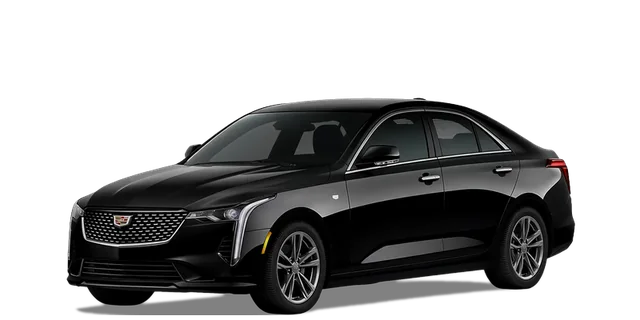 Classic
Luxury Sedan
3 seats · 3 suitcases · A 2024 or newer Cadillac, Mercedes-Benz, Lincoln or Lexus, or similar, for airports, meetings and evenings out
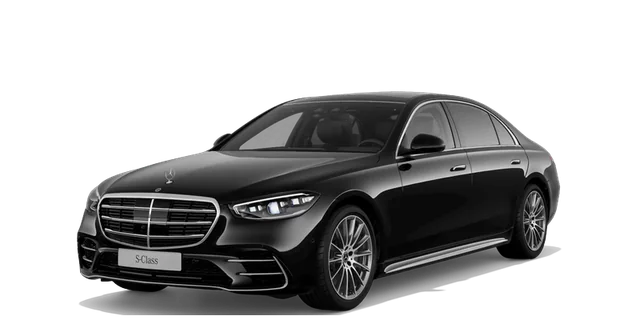 Flagship
Premium Sedan
3 seats · 3 suitcases · A 2024 or newer Mercedes-Benz S-Class or similar, for executives and special evenings
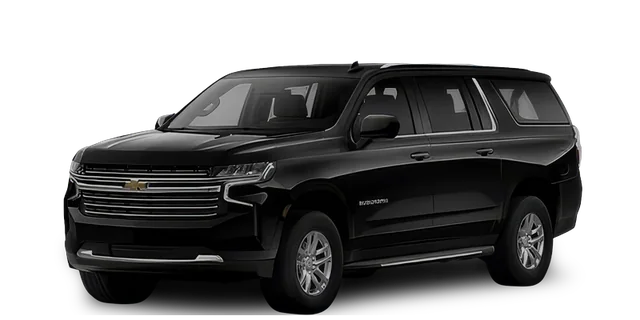 Full Luggage
Luxury SUV
6 seats · 6 suitcases · A 2024 or newer Chevrolet Suburban, GMC or similar, with room for everyone’s luggage
 Flagship
Premium SUV
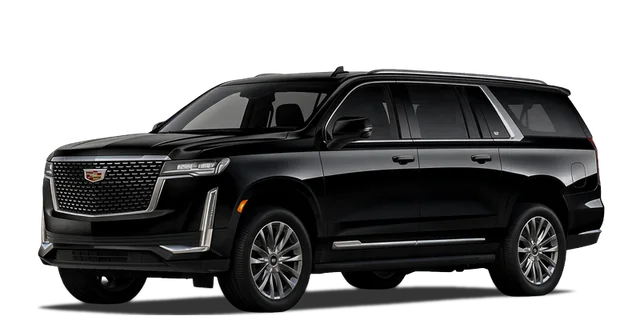
6 seats · 6 suitcases · A 2024 or newer Cadillac Escalade or Lincoln Navigator, or similar, for corporate travel
Need something different? We build custom prices for groups, events, long trips and company accounts.
Reserve online at least 12 hours ahead, or call for anything sooner. Call (917) 720-2726 or text (917) 672-3790, day or night.
Each route page shows the drive for that trip: Manhattan to LaGuardia, Manhattan to Newark, Brooklyn to JFK and Brooklyn to LaGuardia. Travelers coming in from New Jersey, or staying in Queens or on Staten Island, can check those pages too. Hourly service and point-to-point trips explain how a booking is set up, and gratuity is answered in how much to tip your driver.
Questions
NYC Congestion Pricing, Answered
Need a car today? Call (917) 720-2726 or text (917) 672-3790, day or night.
What is NYC congestion pricing?
It is the MTA’s toll for driving into the Congestion Relief Zone, the part of Manhattan from 60th Street south. Drivers of private cars pay it once a day; guests in taxis, black cars and app rides pay a smaller charge on each trip instead.
Where is the Congestion Relief Zone?
Every local street and avenue in Manhattan from 60th Street south. Not included: the West Side Highway (Route 9A), the FDR Drive and the links from the Hugh L. Carey Tunnel to West Street.
When did congestion pricing start?
On January 5, 2025, according to the MTA, which set a six-year phase-in for the toll structure, with rates rising in steps through 2031.
What are the congestion pricing hours?
The toll applies around the clock. On weekdays the peak rate runs from 5 a.m. until 9 p.m.; on Saturdays and Sundays it runs from 9 a.m. until 9 p.m. All other hours are overnight, when the toll is 75% less than peak.
Is there a map of the congestion zone?
Yes, a simple one: the drawing on this page shows the zone’s northern edge at 60th Street and the two shore highways that are not tolled, the FDR Drive and the West Side Highway. It is not to scale.
Is the FDR Drive in the congestion zone?
No. A vehicle that stays on the FDR Drive, or on West Street and the West Side Highway, is not charged, and the links from the Hugh L. Carey Tunnel to West Street are not tolled either.
Do drivers pay every time they enter the zone?
Cars, SUVs, pickup trucks, small vans and motorcycles pay no more than once a day, at the toll in effect at their first entry; the day runs from 12:00 a.m. to 11:59 p.m. Trucks and buses are charged for each entry.
Is driving inside the zone tolled?
No. Starting inside the zone and driving on its streets, or on the FDR Drive or the West Side Highway, is not tolled. Leaving the zone across 60th Street or one of the eight bridges and tunnels and coming back counts as a new entry. A passenger car or motorcycle still pays only the toll in effect at its first entry that day, a day the MTA counts from 12:00 a.m. to 11:59 p.m.
Do you pay congestion pricing in a taxi or black car?
Yes, as a per-trip charge instead of the daily toll. The MTA says customers in taxis, green cabs and black cars pay it on each trip that goes into, out of, inside or through the zone. The smaller charge is for TLC-licensed taxis and for-hire vehicles, whose drivers the MTA tells to sign up for its Per-Trip Charge Plan.
Do app-based rides pay congestion pricing?
Yes. App-based for-hire companies collect a per-trip charge from you on each trip that starts in, ends in, stays inside or passes through the zone.
Is the congestion surcharge the same as congestion pricing?
No. They are separate charges with separate lines on the map. New York State adds its congestion surcharge to taxi and for-hire trips that begin and end in the state and start, end or pass through Manhattan below 96th Street. The MTA congestion pricing toll covers Manhattan at and below 60th Street. Where the state surcharge applies to a Sultan Rides trip, it shows on your confirmation.
Who is exempt from congestion pricing?
The MTA lists six groups: qualifying authorized emergency vehicles, such as ambulances and fire vehicles; qualifying vehicles transporting people with disabilities; specialized government vehicles; school buses contracted with the NYC Department of Education; commuter vans licensed by the TLC; and buses providing scheduled commuter service open to the public. Low-income vehicle owners may qualify for the Low-Income Discount Plan instead.
Is there a credit for the tunnels?
Yes, for vehicles with a valid E-ZPass that enter during the peak period through the Lincoln, Holland, Queens-Midtown or Hugh L. Carey Tunnel. No crossing credits are offered overnight.
How do E-ZPass and Tolls by Mail rates compare?
The MTA says E-ZPass rates for the zone are generally 50% lower than Tolls by Mail rates. Without a matching E-ZPass, the bill goes by mail to the vehicle’s registered owner.
Do residents of the zone pay the toll?
Yes, when their vehicle enters the zone, unless it has an exemption. Days the car stays parked and trips made entirely inside the zone are not charged, and New York State offers a refundable tax credit, equal to the tolls paid, to lower-income residents whose primary home is in the zone.
Do electric cars pay congestion pricing?
Yes. The MTA tolls every vehicle whatever its emissions, unless the vehicle or its owner has an approved exemption.
Will the congestion toll go up?
Yes, on a set schedule. Tolls began on January 5, 2025 at 60% of the values the MTA Board approved in March 2024, and the schedule raises them in two steps, in 2028 and 2031, to the full value.
How fast does the toll show up on E-ZPass?
For E-ZPass New York accounts, within 3 days, with any crossing credit 2 to 4 days later. For E-ZPass accounts from other states, usually within 4 to 6 days, with credits 5 to 7 days after that.
Is a text asking me to pay the congestion toll real?
No. The MTA says texts from “NY Toll Services” or other made-up names are scams, and real E-ZPass New York messages only send you to the E-ZPass NY website.
How does the Low-Income Discount Plan work?
Low-income vehicle owners enrolled in the Low-Income Discount Plan get 50% off peak tolls after their first 10 trips in a calendar month. The plan, like every exemption plan, has to be recertified each year.
Who qualifies for a disability exemption?
People whose disability or health condition keeps them off transit can apply for the Individual Disability Exemption Plan, for their own car or one a family member or caregiver drives for them. Organizations such as Access-A-Ride and ambulette services use a separate plan.
Are school buses and commuter vans exempt?
Yes: school buses under contract with the NYC Department of Education, TLC-licensed commuter vans, and buses running scheduled commuter service open to the public.
Do I need E-ZPass for the Low-Income Discount Plan?
Yes. Only vehicles linked to an E-ZPass NY account can enroll in the Low-Income Discount Plan or an exemption plan.
Can I use an out-of-state E-ZPass in the zone?
Yes, and you pay the E-ZPass rate as long as the vehicle’s plate is registered on that E-ZPass account.
Does the state surcharge apply to a trip from Newark Airport?
No. The New York State congestion surcharge covers for-hire trips that start and finish inside New York State and also start in, end in or cross Manhattan below 96th Street, so a trip that starts in New Jersey falls outside it.
Do the Lincoln and Holland Tunnels charge in both directions?
No. The Port Authority collects its bridge and tunnel tolls only on the way into New York; nothing is charged heading into New Jersey. A trip from Newark into Manhattan can carry the tunnel toll and the zone charge, while the trip back out to Newark carries no Port Authority toll.
Which vehicles carry the state congestion surcharge?
Taxis, green cabs, limousines, black cars, livery vehicles, app-based rides and pool vehicles, the Tax Department says. Trips for funerals, certain buses, school district contracts, the MTA and ambulances are not covered.
Who pays the tolls in a yellow taxi?
You do. TLC rules require taxi drivers to use E-ZPass at tolls, and you reimburse the toll at the E-ZPass rate.
How does the system know I stayed on the FDR Drive?
Detection points sit along the excluded roads. A vehicle seen at several of them in sequence, then leaving the zone within a reasonable time, is not charged; one that drops out of sight on the way is.
Is a drive from Chambers Street into Battery Park City tolled?
No. The MTA’s own example: starting on Chambers Street in Lower Manhattan and crossing West Street into Battery Park City stays inside the zone, so it is not tolled.
If I come in through a tolled tunnel, do I pay twice?
You pay both, but during the peak period E-ZPass users get a crossing credit against the zone toll. Its size depends on the vehicle type and on whether the tunnel is tolled one way or both ways.
What if my E-ZPass is not mounted properly?
If the tag cannot be read and the plate is not on an E-ZPass account, the registered owner gets a Tolls by Mail bill, at the Tolls by Mail rate rather than the E-ZPass one.
How do I dispute a congestion toll?
E-ZPass customers can dispute a toll from the past 180 days in writing to E-ZPass Customer Account Correspondence in Albany. A Tolls by Mail bill can be disputed with proof such as a bill of sale, a police report of a theft, or a plate surrender receipt.
Are app trips charged more than taxis?
Yes. The MTA sets one per-trip charge covering taxis, green cabs and black cars, and a higher one for high-volume for-hire vehicles, the large app companies.
Can residents of the zone get the tolls back?
Lower-income residents whose primary home is in the zone can claim a refundable New York State tax credit equal to the zone tolls they paid that year, as long as the tolls were not business expenses.
Do I pay again for each day I stay in the zone?
No. A vehicle that stays in the zone, parked for days or driving only inside it, is not charged again until it leaves and comes back in.
Can I see the toll before I drive in?
Yes. The MTA’s toll rate calculator estimates it from the vehicle type, the time of day, the payment method and any crossing credit.
Which crossings lead into the zone?
The MTA’s answers name the Brooklyn, Manhattan, Williamsburg and Queensboro Bridges and the Queens-Midtown, Hugh L. Carey, Holland and Lincoln Tunnels, plus the street line at 60th Street.
What counts as a small truck for the toll?
Non-articulated trucks, pickups with modified beds or caps above the roofline, and vans with a modified body behind the cab or an extended roof above the windshield. Grocery and package delivery trucks are the MTA’s examples.
What counts as a large truck?
An articulated truck, where a power unit pulls one or more trailers.
Do I need a deposit for an E-ZPass NY tag?
No. The MTA removed the deposit requirement for accounts without a credit card linked to them.
How is the toll collected?
Cameras at the detection points read every plate entering the zone. The toll goes to the E-ZPass account linked to that plate, or comes as a Tolls by Mail bill to the registered owner.
Which neighborhoods are inside the zone?
Everything in Manhattan from 60th Street south, so Midtown, Hudson Yards, Chelsea, Greenwich Village, SoHo, Tribeca, the Lower East Side and the Financial District are all inside. Harlem, Washington Heights and the Upper East and Upper West Sides above 60th Street are outside.
Which trips carry neither charge?
A trip that never enters Manhattan below 96th Street carries neither the MTA charge nor the state surcharge. The route counts, not only the two ends: a trip between two points outside Manhattan that passes through the zone carries the MTA per-trip charge, and an in-state trip that passes through Manhattan below 96th Street carries the state surcharge.
Does a trip from JFK to Brooklyn or Queens carry congestion pricing?
No, unless the route goes into, out of or through the zone. A route that stays in Queens and Brooklyn never reaches Manhattan below 60th Street, so neither the MTA charge nor the state surcharge applies to it.
Is the airport access fee at JFK and LaGuardia part of congestion pricing?
No. It is a separate Port Authority charge. The JFK and LaGuardia schedules of charges apply a ground transportation access fee to each for-hire vehicle pick-up and drop-off at the airport, and to each taxi pick-up, and add it to the fare you pay. The Port Authority approved increases on March 15, 2026, with further steps on March 15 in 2027 and 2028.
Is congestion pricing in a Sultan Rides fare?
Not in the flat rate itself. It is added to the fare before you confirm, like the tolls for your route. A toll is added only when your route crosses one, and no charge appears that is not listed in our Cancellation, Refund and Fee Policy. One flat rate. Gratuity, tax and card fees are included; tolls and congestion pricing for your route are added before you confirm. Meet and greet is available as an add-on. No surprises, never surged.
Does a trip from JFK to Midtown carry congestion pricing?
Yes. Midtown is inside the zone, so the trip ends in it, and a TLC-licensed trip under the MTA’s Per-Trip Charge Plan carries the per-trip charge rather than the daily toll. In a Sultan Rides car, congestion pricing for your route is added to the fare, with the tolls, before you confirm.
Do hourly reservations in the zone pay it too?
Yes, as part of the tolls: congestion pricing is added once per hourly reservation, with the tolls. The clock starts at the scheduled pickup time, even if you are not out yet. Extra time after the booked hours is billed by the extra hour at the same hourly rate. One hourly rate, three hours at least: gratuity, tax and card fees included, plus tolls. Never surged.
Can a company be invoiced for trips into the zone?
Yes, once approved. Companies Sultan Rides approves are invoiced on the billing cycle and terms agreed with each company, instead of paying trip by trip. Opening a company account is free, with no minimum number of trips.
What if my flight is late, or my plans change?
Flights are tracked, and the free wait at the airport is 45 minutes after a domestic landing and 60 minutes after an international one, counted from the actual landing; other pickups get 15 minutes. Sedans and SUVs canceled 24+ hours before pickup are refunded less the 4% card fee; under 24 hours, 50% less that fee; no refund once dispatched or no-show. If the airline cancels your flight, the reservation can be rebooked or credited under the same policy. If your flight is diverted to another airport, the pickup moves to that airport. You can also ask for a set pickup time instead of flight tracking, and the chauffeur arrives at that time; the standard 15-minute free wait then starts from that time. The full terms are in the cancellation and refund policy.
How many vehicles enter the zone on a weekday?
In the first two weeks, January 5 to 18, 2025, the MTA counted about 490,000 entries on an average weekday: roughly 4,000 vehicles every 10 minutes through 12 detection areas, read by 110 detection points. Cars, pickups and vans made 57% of the entries, taxis and for-hire vehicles 36%.
Where do vehicles enter the zone?
By the MTA’s count for those two weeks, 43% of entries crossed the 60th Street cordon, 24% came from Brooklyn over the Brooklyn and Manhattan Bridges and through the Hugh L. Carey Tunnel, and 17% through the Lincoln and Holland Tunnels from New Jersey.
Can the state congestion surcharge come out of a driver’s pay?
No. The TLC says the surcharge cannot be taken out of the driver’s pay and must be passed on to you, and Access-A-Ride and other MTA-dispatched trips carry none.